The Short Answer: £3,000 to £30,000+
A website prototype typically costs between £3,000 and £30,000, with most mid-market B2B projects landing in the £5,000 to £15,000 range. That spread is wide because “prototype” means very different things to different people. A clickable wireframe for a five-page marketing site is a fundamentally different deliverable from a fully interactive prototype of a SaaS dashboard with conditional logic, form validation states, and responsive breakpoints mapped out across three device sizes.
The cost depends on four things: the scope of what you’re prototyping, the fidelity level you need, the complexity of user interactions, and who is doing the work. Let’s break each of these down so you can estimate what your specific project is likely to cost and, more importantly, understand where the money actually goes.
What You’re Actually Paying For
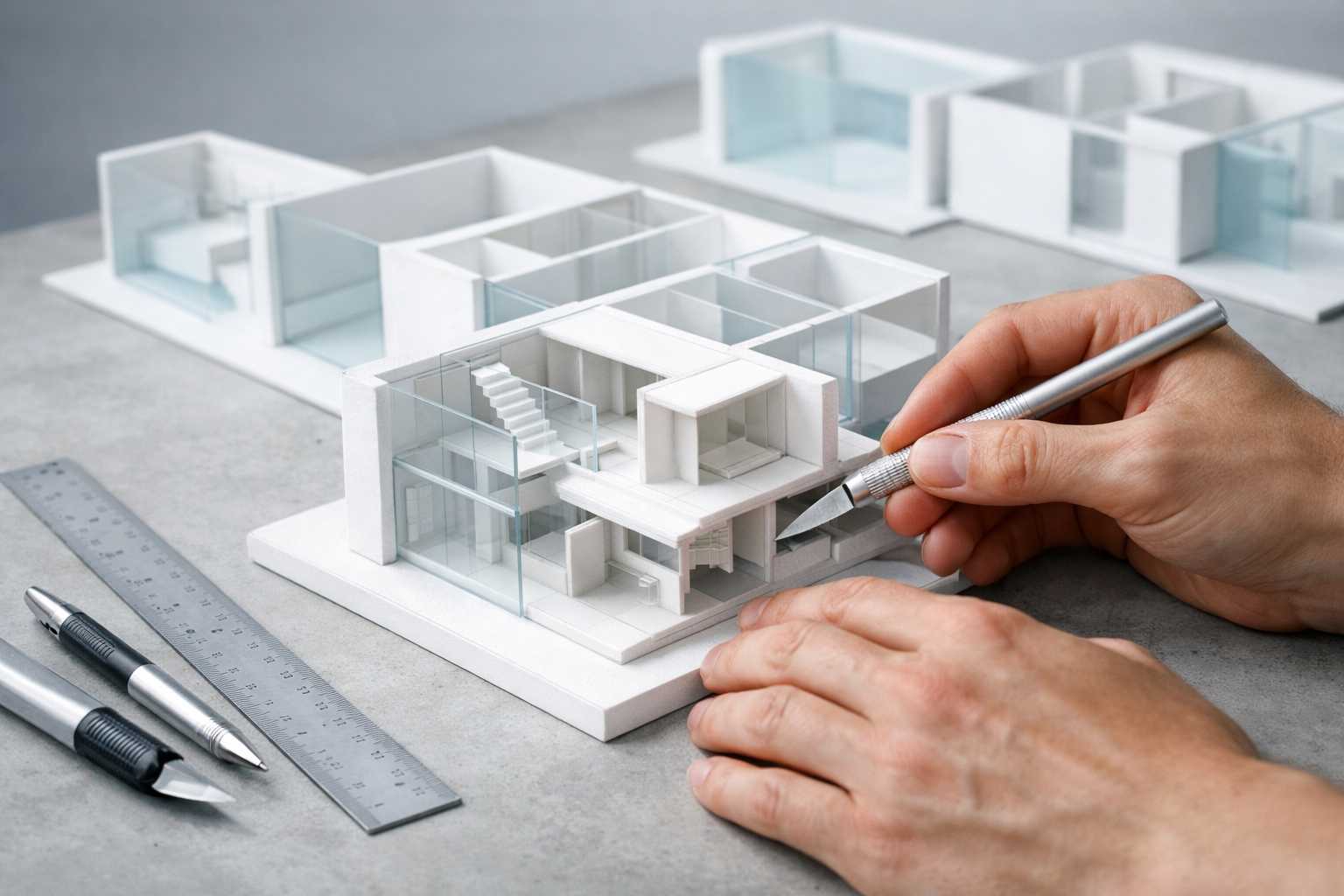
When clients first ask us about prototype costs, they often picture a designer clicking through screens in Figma for a few days. The reality is that a useful prototype involves significantly more thinking than clicking. The bulk of the cost goes into research, information architecture, content strategy, and interaction design. The screens themselves are almost a byproduct of that thinking.
Here’s what a typical prototype engagement includes:
- Discovery and requirements gathering to understand your business goals, audiences, and technical constraints
- Information architecture work to define page hierarchy, navigation structures, and content organisation
- User flow mapping to plot the paths visitors take from entry to conversion
- Screen design at the agreed fidelity level, whether that’s low-fidelity wireframes or high-fidelity interactive layouts
- Interactivity and linking so stakeholders can click through the prototype as if it were a real website
- Stakeholder review sessions where the prototype is presented, tested, and revised
- Iteration rounds based on feedback, typically two to three rounds depending on the engagement
You’re paying for the strategic decisions that get embedded into those screens. A good prototype answers questions like “What should the homepage prioritise?”, “How do we handle navigation for six different audience segments?”, and “What does the enquiry flow look like for someone who’s never heard of us?” Those answers are what make the prototype valuable, not the pixels.
Fidelity Levels and How They Affect Price
Fidelity is the single biggest factor in prototype cost. It refers to how closely the prototype resembles the finished website in terms of visual detail and functional behaviour. There are three broad levels, and each serves a different purpose.
Low-Fidelity Wireframes (£3,000 to £7,000)
Low-fidelity prototypes use basic shapes, placeholder text, and simple greyscale layouts to represent page structure and content hierarchy. They look deliberately unfinished, which is the point. When stakeholders see a polished design, they focus on colours, fonts, and imagery. When they see a wireframe, they focus on structure, messaging, and user flow, which is exactly what you need to validate early.
At this level, you’re typically getting 10 to 25 screens with basic click-through navigation. The prototype shows how pages connect, where key content sits, and what the user journey looks like from landing page to conversion point. What we see across client projects is that low-fidelity prototypes are the most cost-effective way to align internal stakeholders before investing in visual design. They catch structural problems that would cost five to ten times more to fix once full design and development are underway.
Mid-Fidelity Interactive Prototypes (£7,000 to £15,000)
This is where most of our mid-market client projects sit. Mid-fidelity prototypes include more refined layouts, real or near-final content, typographic hierarchy, and a higher degree of interactivity. You’ll see hover states, form interactions, dropdown menus, and responsive behaviour across desktop and mobile. The visual design might be partially applied, using your brand colours and type, but without the final polish of production-ready design.
The additional cost over low-fidelity comes from three places. First, there’s more interaction design work: mapping out what happens when someone clicks, hovers, scrolls, or fills in a form. Second, there’s more screen variation: you need mobile layouts alongside desktop, and you often need to prototype different states of the same page (empty states, error states, logged-in versus logged-out views). Third, there’s more content work. Mid-fidelity prototypes lose their value quickly if they’re filled with lorem ipsum. Real headings, real calls to action, and representative body copy are necessary for the prototype to be testable.
High-Fidelity Prototypes (£15,000 to £30,000+)
High-fidelity prototypes look and feel almost indistinguishable from a finished website. They use final brand visuals, polished UI components, realistic content, and detailed micro-interactions. Some are built in design tools like Figma with extensive prototyping features; others are built as coded front-end prototypes in HTML/CSS that run in a browser.
You’d invest at this level when you need to user-test with real customers, when you’re presenting to a board or investors who need to see something that looks “real,” or when your website involves complex application-like functionality (configurators, multi-step processes, personalised dashboards) that can’t be meaningfully evaluated without realistic interaction. Costs at this tier are higher because the design work approaches production quality, and if you’re going the coded prototype route, you’re paying for front-end development time as well.

Scope: The Number of Pages and Unique Templates
The second major cost driver is how many unique page types your website needs. Notice the word “unique.” A prototype for a 200-page website doesn’t require 200 screens. It requires prototypes of each distinct template type, plus the key user flows that connect them.
A typical B2B marketing site might need prototypes for:
- Homepage
- Service or product overview page
- Individual service or product detail page
- About / company page
- Case study or portfolio page
- Blog listing and individual post template
- Contact or enquiry page
- Resource or knowledge hub page
That’s roughly 8 to 12 unique templates. At mid-fidelity with desktop and mobile versions, you’re looking at 20 to 30 screens. This is a very manageable scope that typically falls in the £7,000 to £12,000 range.
Where costs climb is when you add complex functional areas: customer portals, product filtering and comparison tools, multi-step application forms, booking systems, or e-commerce checkout flows. Each of these can add 10 to 20 screens to the prototype, with significantly more interaction design work per screen. A B2B company with a standard marketing site plus a customer login area with a dashboard, document library, and support ticket system might see the prototype scope double.
Who Does the Work Matters More Than You Think
The market for prototype work spans a wide range of providers, and the cost variation between them is significant.
Freelance UX designers typically charge £300 to £600 per day in the UK, and a mid-fidelity prototype might take 10 to 20 days of their time. You’ll pay less overall, but you’re relying on one person to handle strategy, information architecture, interaction design, and visual layout. Some freelancers are outstanding at all of these; many are stronger in some areas than others. The risk is gaps in the strategic thinking that a prototype is supposed to encode.
Specialist consultancies (this is where we sit) typically price prototype engagements as fixed-fee projects rather than day rates. You’re paying for a team that includes a UX strategist, a designer, and often a content or IA specialist working collaboratively. The process is structured around stakeholder workshops, defined review cycles, and deliverables that are designed to feed directly into the next phase of design and development. This is typically the £7,000 to £20,000 range for mid-market projects.
Large agencies will charge £20,000 to £50,000+ for prototype work, partly because their overheads are higher and partly because they tend to bundle prototyping into broader discovery phases that include brand strategy, competitive analysis, and sometimes user research. If you genuinely need all of those services, the bundled price can represent good value. If you mainly need a prototype to align your team and validate your website structure, you’re likely paying for more than you need.
The Hidden Cost: What Happens Without a Prototype
The most useful way to think about prototype cost isn’t in absolute terms. It’s relative to the cost of getting it wrong without one.
A full website design and build for a mid-market B2B company typically runs between £30,000 and £150,000. When teams skip prototyping and jump straight into visual design or development, what we consistently see is that structural problems surface late. The navigation doesn’t work for a key audience segment. The homepage tries to serve six different goals and serves none of them well. The lead generation flow has too many steps. The content hierarchy buries the most important information.
Fixing these problems after visual design is complete typically costs 3 to 6 weeks of rework. Fixing them after development has started can cost 6 to 12 weeks. On a project with a £80,000 build budget, that’s £10,000 to £25,000 in avoidable rework. A £10,000 prototype that catches those problems early pays for itself several times over.
There’s also a less tangible but equally real cost: stakeholder misalignment. Without a prototype, different people in your organisation carry different mental models of what the website will be. The marketing director pictures one thing, the sales team another, the CEO something else entirely. These differences don’t surface until the first design reveal, which is exactly the wrong time for a fundamental debate about site structure and priorities. A prototype forces those conversations early, when changes are cheap and quick. We explain this dynamic in detail in our prototype-first guide, which walks through how early prototyping de-risks the entire project timeline.
What Affects Price Most: A Practical Breakdown
To make this more concrete, here are three real-world scenarios with approximate pricing based on what we typically see in mid-market engagements.
Scenario 1: Simple Marketing Site Prototype
A B2B professional services firm with 60 employees is redesigning their website. They need a prototype covering 8 unique page templates, desktop only, at low-to-mid fidelity. The goal is to align the leadership team on site structure and messaging hierarchy before commissioning a full design.
Typical cost: £4,000 to £7,000. This includes a half-day discovery workshop, information architecture, wireframe creation, and two rounds of revisions. Timeline: 2 to 3 weeks.
Scenario 2: Mid-Complexity B2B Site with Lead Generation Focus
A SaaS company with 150 employees is building a new marketing website with multiple product lines, a resource centre, and a sophisticated lead-nurture journey that includes gated content, demo booking, and pricing page interactions. They need desktop and mobile prototypes at mid-fidelity covering roughly 15 unique templates and three core user flows.
Typical cost: £9,000 to £15,000. This includes discovery, user flow mapping, content hierarchy work, responsive prototyping, and three rounds of stakeholder review. Timeline: 4 to 6 weeks.
Scenario 3: Complex Website with Application-Like Features
A fintech company with 300 employees needs a prototype for a new website that includes both a public marketing site and a customer-facing portal with a dashboard, transaction history, document management, and a multi-step onboarding wizard. They need high-fidelity interactive prototypes that can be user-tested with real customers before development begins. The scope covers 25+ unique templates across desktop, tablet, and mobile.
Typical cost: £18,000 to £30,000. This includes extensive discovery, user research input, detailed interaction design, high-fidelity screen design, comprehensive prototyping with realistic interactions, and user testing support. Timeline: 6 to 10 weeks.

How to Get Accurate Quotes
If you’re shopping for prototype work, the quality of the quotes you receive depends entirely on how well you brief the project. Vague briefs produce vague estimates with wide ranges. Specific briefs produce tighter, more comparable quotes.
Before approaching any provider, prepare the following:
- A list of the page types your website needs (not every page, but every distinct template)
- The key user journeys you want the prototype to cover (e.g., “prospect discovers us via Google, reads a case study, and books a demo”)
- Your primary audience segments and what each needs from the site
- Any complex functional requirements such as portals, calculators, filtering tools, or integrations
- The fidelity level you think you need and what you plan to do with the prototype (internal alignment, board presentation, user testing, developer handoff)
- Your existing assets: do you have a brand guide, existing content, competitor examples you like or dislike?
A provider who asks you detailed questions about business goals, audiences, and decision-making processes before quoting is generally one worth working with. A provider who quotes a fixed price based solely on page count is likely underestimating the strategic work involved.
Where Companies Waste Money on Prototypes
There are a few common ways we see companies overspend on prototype work without getting proportional value.
Going too high-fidelity too early. If your primary goal is to align your internal team on site structure and user flow, you don’t need pixel-perfect screens. High-fidelity prototypes are expensive precisely because they involve design decisions about colour, typography, imagery, and micro-interactions. If those decisions haven’t been informed by validated structure and content strategy, you’re polishing something that might need to be fundamentally restructured. Start low, validate, then increase fidelity.
Prototyping everything at the same depth. Not every page needs the same level of attention. Your homepage, key landing pages, and primary conversion flows deserve detailed prototyping. Your privacy policy page and your team biography template do not. Our team typically recommends identifying the top 5 to 8 critical templates and prototyping those thoroughly, while representing secondary pages at a lighter touch.
Skipping content strategy. A prototype built around placeholder content will be validated based on layout alone. Then when real content enters the picture during design or development, it breaks everything. Page structures that looked elegant with three neat paragraphs of lorem ipsum collapse when the actual service description runs to 800 words. Investing in content-first prototyping, where real or representative content drives the layout decisions, costs a bit more upfront but saves far more downstream.
Treating the prototype as a one-time deliverable rather than a living tool. The best return on prototype investment comes when the prototype is maintained and updated as decisions evolve during the project. Some teams commission a prototype, review it once, file it away, and proceed with design based on memory and meeting notes. The prototype should be the single source of truth that designers and developers reference throughout the build.
Should You Prototype In-House?
If you have a skilled UX designer on your team who understands information architecture, user flow design, and tools like Figma or Axure, in-house prototyping is viable. The tooling costs are modest: Figma’s professional plan runs about £12 per editor per month, and that’s genuinely all you need from a software standpoint.
The challenge isn’t the tools. It’s objectivity and dedicated time. Internal teams carry assumptions about their own business that an external eye naturally challenges. They also tend to get pulled into day-to-day work, stretching a two-week prototype sprint into two months of intermittent progress. If your internal designer can be fully dedicated to the prototype for the required duration and your team is willing to have their assumptions questioned, in-house can work well for lower-complexity projects.
For larger, more complex websites, or for situations where internal stakeholder alignment is a core challenge, an external partner brings structured facilitation, cross-industry pattern knowledge, and the ability to push back on requests that would harm the user experience. That perspective is often worth as much as the prototype itself.
What to Budget: A Rule of Thumb
A useful planning heuristic: budget 10% to 15% of your total website project cost for prototyping. If you’re planning a £100,000 website redesign, allocating £10,000 to £15,000 for a thorough prototype is proportionate and typically delivers a strong return in reduced rework, faster decision-making, and better final outcomes.
If your total website budget is under £30,000, even a lightweight £3,000 to £5,000 wireframing exercise will significantly reduce the risk of building the wrong thing. The smaller your total budget, the more painful rework becomes, which paradoxically makes prototyping more important, not less.
The most expensive prototype is the one you didn’t build, discovered you needed halfway through development, and had to retroactively create under time pressure while your development team waited. Plan for it from the start, scope it appropriately, and treat it as the foundation of your project rather than an optional extra. Every pound spent on prototyping saves multiple pounds in development, and the earlier you prototype, the greater that multiplier becomes.