The Short Answer
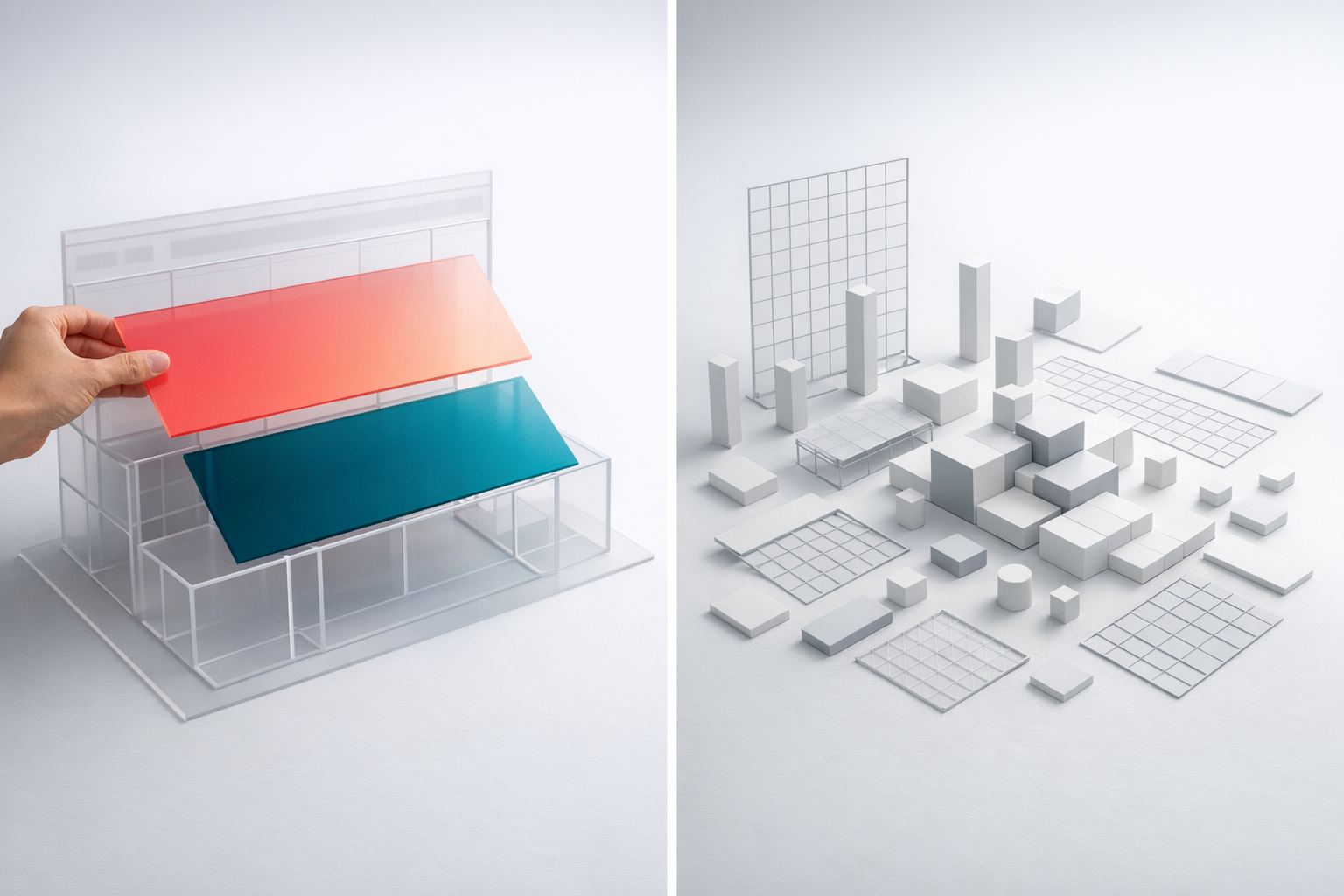
A website refresh updates the visual layer of your existing site, things like colours, typography, imagery, and content, while keeping the underlying structure, platform, and functionality intact. A website redesign is a more fundamental rebuild that rethinks the site’s information architecture, user experience, technology stack, and often its strategic purpose. The difference matters because choosing the wrong one wastes either money (if you redesign when a refresh would suffice) or time (if you keep refreshing a site that needs rebuilding from the foundations up).
Most of the confusion we see with clients stems from the fact that these two terms get used interchangeably by agencies and internal teams. Someone says “we need a website redesign” when what they actually mean is “the homepage looks dated and we want new photos.” Conversely, teams sometimes ask for a “quick refresh” when the real problems are buried in poor navigation, broken lead flows, and a CMS that nobody can update without developer support. Getting this distinction right at the start of a project shapes your budget, your timeline, your vendor requirements, and ultimately whether the project delivers the outcomes you need.
What a Website Refresh Actually Involves
Think of a refresh as repainting and redecorating a house. The walls stay where they are. The plumbing doesn’t change. You’re working within the existing structure to make things look and feel better.
In practical terms, a website refresh typically includes updates to visual design elements such as colour palette, typography, button styles, and imagery. It often involves rewriting or editing page copy to better reflect your current messaging and brand positioning. You might update your logo placement, swap stock photography for custom images, or modernise the look of your blog templates. The key characteristic is that you’re working within the constraints of your current platform, page structure, and site architecture.
A refresh is the right move when your site’s underlying structure is sound but the surface has fallen behind. Maybe your brand went through a visual identity update six months ago and the website still shows the old colours and fonts. Perhaps your messaging has evolved but the homepage hero still talks about a product line you’ve since retired. These are cosmetic and content problems, not structural ones.
Typical Scope of a Refresh
Across our projects, we’ve found that a well-scoped refresh for a mid-market B2B company usually touches these areas:
- Updated visual styling applied to existing page templates
- Revised copy on key pages (homepage, about, services, and top landing pages)
- New or updated imagery and graphics
- Minor layout adjustments within existing templates
- Basic SEO housekeeping such as updating meta descriptions and fixing broken links
- Content additions like new case studies or team bios
What a refresh does not typically include is changing your CMS, restructuring your navigation, rebuilding your page templates from scratch, or adding significant new functionality like a customer portal or product configurator. If your scope starts creeping into those territories, you’re no longer talking about a refresh.
Timeline and Budget Expectations
A focused refresh for a 30-to-50-page B2B website generally takes four to eight weeks and costs significantly less than a full redesign, often 20-40% of what a ground-up project would require. The reason is straightforward: you’re skipping the heaviest phases of a web project, namely discovery, information architecture, UX design, and platform development. You’re applying changes to an existing framework rather than building a new one.
That said, “cheap and fast” only holds true if you actually stay within refresh territory. The moment someone in a stakeholder meeting says “while we’re at it, could we also restructure the services section and add a resource library with gated content?”, you’ve silently crossed into redesign scope. This is one of the most common ways web projects go sideways: they start as a refresh and gradually absorb redesign-level requirements without anyone adjusting the budget or timeline.
What a Website Redesign Actually Involves
A redesign is demolishing and rebuilding that house, or at minimum gutting it down to the studs. You’re rethinking why the site exists, who it serves, how people move through it, and what technology supports it. The visual design is part of it, but it’s one layer in a much deeper stack of decisions.
A redesign typically begins with strategic discovery: understanding your business goals, your audience segments, how visitors currently behave on the site, where they drop off, what content performs, and what doesn’t. From there, you move into information architecture, defining the sitemap, navigation hierarchy, and page-level content structure. Then comes UX and wireframing, followed by visual design, development, content migration, testing, and launch.
The distinguishing feature of a redesign is that nothing is assumed to carry over. Every element of the current site is evaluated on its merits. Pages might be consolidated, removed, or split into new sections. The URL structure might change. The CMS might change. Forms, integrations, and third-party tools all need to be re-evaluated and reconnected. It’s a substantially larger undertaking with more moving parts and more stakeholders involved.
When a Redesign Is the Right Call
You need a redesign, not a refresh, when the problems with your website are structural rather than cosmetic. Here are the telltale signs:
Your site architecture doesn’t match your business. If your company has evolved significantly since the site was built, adding new service lines, entering new markets, shifting from product-led to solutions-led positioning, then the site’s navigation and page structure probably no longer reflect how customers think about your offering. No amount of new paint fixes a floor plan that doesn’t work.
Your CMS is holding you back. If your marketing team can’t publish a blog post, update a landing page, or create a new campaign page without filing a developer ticket, that’s a platform problem. A refresh won’t solve it. You need a new CMS or a fundamentally different implementation of your current one.
Performance and technical debt are compounding. Slow page loads, poor mobile experience, accessibility failures, bloated plugin dependencies, and security vulnerabilities are signs of a codebase that needs replacing, not patching. We’ve seen sites where teams had been applying refresh after refresh for years, each one adding another layer of CSS overrides and workarounds, until the site became nearly unmaintainable.
Your conversion pathways are broken. If visitors can’t easily find what they need, if lead forms are buried three clicks deep, if there’s no logical journey from awareness content to a conversion action, then the user experience architecture needs rethinking. That’s redesign territory.
You’re planning a significant business change. Mergers, acquisitions, rebrandings, new market entries, and major product launches all tend to require a redesign because the site’s strategic purpose is shifting, not just its appearance.
Typical Scope of a Redesign
A mid-market B2B website redesign typically involves:
- Strategic discovery and stakeholder alignment
- Audience research and user journey mapping
- Information architecture and sitemap development
- Wireframing and UX design for key page templates
- Visual design system creation (not just a homepage mockup)
- Front-end and back-end development
- CMS configuration and content modelling
- Content migration or creation
- Integration with CRM, marketing automation, analytics, and other tools
- QA testing, performance optimisation, and accessibility review
- SEO migration planning (redirects, URL mapping, metadata)
- Launch and post-launch support
Timelines for a well-managed redesign typically run three to six months for a mid-market site. Budget varies enormously based on complexity, but you should expect to invest two to five times what a refresh would cost. The critical thing is that this investment addresses root causes rather than symptoms.

How to Determine Which One You Need
The simplest diagnostic we use with clients is to separate the complaints from the causes. When stakeholders say “the site looks outdated,” that’s a complaint. The cause might be cosmetic (old brand assets, dated stock photography) or it might be structural (the layout patterns, page templates, and content hierarchy are fundamentally from another era of web design). Cosmetic causes point to a refresh. Structural causes point to a redesign.
Here’s a practical exercise. Gather the five or six most common criticisms of your current website from across your team: sales, marketing, leadership, customer success. Write each one down. Then for each criticism, ask: “Could we fix this by changing what’s visible on the page without altering the page structure, navigation, or platform?” If most answers are yes, you’re looking at a refresh. If most answers are no, or if the fixes cascade into deeper changes, you need a redesign.
The Audit Approach
Before committing to either path, it’s worth conducting a structured audit of your current site. This doesn’t need to be a six-week engagement. A focused assessment covering these areas usually provides enough clarity:
Technical health. Run your site through performance and accessibility tools. Check page load times, mobile responsiveness, Core Web Vitals scores, and whether the codebase is reasonably clean or held together with duct tape. Serious technical issues generally rule out a refresh.
Content effectiveness. Look at analytics for your top 20 pages. Are people finding them? Are they engaging? Are they converting? If the content is solid but the packaging is stale, that’s refresh territory. If entire sections of the site get no traffic, the architecture might be burying them.
CMS capability. Have your marketing team attempt common tasks: updating a page headline, adding a new team member, creating a landing page for a campaign. If these tasks are painful or impossible without developer help, that’s a platform issue a refresh won’t touch.
Conversion performance. Map the journey from a first-time visitor to a qualified lead. Count the steps, identify the friction points, and assess whether the current site structure supports or hinders that journey. Navigation problems, confusing service categorisation, and missing calls to action are architectural issues.
This kind of structured evaluation is exactly what we cover in our blueprint-first guide, which explains why validating your requirements before committing to a project approach saves teams from the expensive mistake of solving the wrong problem.
The Dangerous Middle Ground
The most expensive outcome isn’t choosing a refresh or a redesign. It’s starting a refresh that becomes an unplanned redesign. We’ve seen this pattern repeatedly, and it almost always plays out the same way.
A company decides they need a refresh. They hire an agency or freelancer on a refresh budget and timeline. Work begins. During the first round of reviews, stakeholders start requesting changes that go beyond the visual layer. “Can we restructure the services section?” “Can we add a resource hub?” “The navigation doesn’t make sense anymore, can we fix that?” Each request is individually reasonable, but collectively they transform the project into a redesign being executed on a refresh budget with a refresh timeline.
The result is predictable: the project runs over budget, misses its deadline, and delivers a compromised outcome that’s neither a clean refresh nor a thorough redesign. The agency cuts corners to stay within scope. The client feels frustrated that they’re paying more for less. Nobody is happy.
The way to avoid this is to invest in proper scoping before you commit to an approach. Spend the time upfront to identify what’s actually wrong with your site, categorise those issues as cosmetic or structural, and make a deliberate, informed choice about which path to take. If the answer is a redesign, budget for a redesign. If it’s a refresh, hold the line on scope and save the structural changes for a future phase.

Can You Do a Phased Approach?
Yes, and in many cases this is the smartest path. A phased approach lets you start with a refresh to address the most visible and urgent issues while planning a more comprehensive redesign for a later date. This works particularly well when you have a near-term event driving urgency, like a product launch, a rebrand, or a trade show, but also recognise that the site needs deeper structural work.
The key to making a phased approach work is being explicit about what each phase includes and excludes. Phase one might be a visual refresh of the homepage, key landing pages, and blog templates, achievable in six weeks. Phase two might be a full information architecture overhaul and CMS migration, planned for the following quarter. When both phases are scoped clearly from the start, each one delivers a clean, complete outcome rather than a half-finished compromise.
Where phased approaches fail is when phase one is scoped but phase two is left vague. “We’ll handle the structural stuff later” has a habit of meaning “we’ll never get around to it” or “we’ll try to sneak it into phase one when nobody’s looking.” Define both phases with the same rigour, even if you’re only funding phase one immediately.
How This Affects Your Vendor Selection
The refresh-versus-redesign distinction also changes who you should hire for the project. A refresh is often well suited to a skilled designer or small studio. The work is primarily visual and content-focused, and doesn’t require deep technical architecture or UX research expertise. You need someone with a good eye, strong brand sensibility, and the ability to work within your existing platform.
A redesign requires a broader set of capabilities. You need strategic thinking (someone who can challenge your assumptions about site structure and user journeys), UX expertise (someone who designs based on evidence rather than aesthetics alone), technical architecture (someone who can evaluate platforms, plan integrations, and build a maintainable codebase), and project management (someone who can coordinate the dozen-plus workstreams that a redesign involves). That usually means a more experienced team, whether it’s an agency, a consultancy, or a carefully assembled group of specialists.
Hiring a large agency for a simple refresh is overpaying. Hiring a solo designer for a complex redesign is underscoping. Match the vendor to the actual project type, not to the label someone attached to it in a budget meeting.
A Practical Decision Framework
Rather than relying on gut feel, use this framework to guide your decision. For each statement below, assess whether it’s true for your current situation:
Signs you need a refresh:
- The site’s navigation and page structure still make sense for your business
- Your CMS is functional and your team can make routine updates
- The main issue is that the site looks dated or doesn’t reflect your current brand
- Page load speeds and mobile experience are acceptable
- Your conversion rates are reasonable but you want to improve messaging
- The site was last redesigned within the past two to three years
Signs you need a redesign:
- Your business model, services, or target audience have changed significantly since the site was built
- The site architecture doesn’t reflect how customers think about your offering
- Your CMS is a bottleneck and your team avoids updating the site because it’s too difficult
- You have significant technical debt, poor performance, or accessibility issues
- Conversion rates are declining despite traffic being stable or growing
- The site was last redesigned more than four to five years ago
- You’re integrating new tools (CRM, marketing automation, personalisation) that require platform changes
If you’re ticking boxes in both columns, that’s normal. Most sites have a mix of cosmetic and structural issues. The question is which category dominates. If structural issues account for 60% or more of the problems, invest in the redesign and get the cosmetic updates as part of it. Doing a refresh first just delays the real work.
Making the Right Call
The difference between a refresh and a redesign isn’t just about scope or budget. It’s about solving the right problem. A refresh solves the problem of a good website that looks tired. A redesign solves the problem of a website that’s no longer fit for purpose. Misdiagnosing which situation you’re in leads to wasted budget, frustrated teams, and a project that doesn’t move the needle on the business outcomes you care about.
Before you brief an agency, write an RFP, or set a budget, invest the time to understand what’s actually wrong with your current site. Talk to your sales team about what prospects say. Look at your analytics to see where visitors struggle. Have your marketing team document every frustration they encounter when trying to use the CMS. Gather the evidence first, then choose the approach that addresses the real problems. That discipline at the front end of a project is worth more than any amount of clever design or expensive development later on.
Ready to get started?